Angel Families Speak Out: Victims Demand Stronger Border Security
In a powerful and poignant call for justice, families who have suffered the unimaginable loss of loved ones due to crimes allegedly committed by individuals illegally present in the United States have consistently voiced their demand for stronger border security. These "Angel Families," as they have come to be known, embody the heartbreaking human cost of what they perceive as insufficient immigration enforcement. Their pleas have found a consistent and vocal advocate in former President Donald Trump, who has not only recognized their profound suffering but also directly linked their tragedies to what he calls lax border policies.
The movement gained significant national attention with a proclamation by former President Trump declaring "National Angel Family Day." This initiative, designed to honor these grieving families, underscores a central argument: that their loved ones would still be alive today if immigration enforcement had been more robust. This sentiment resonates deeply with many Americans and serves as a critical focus in the ongoing national debate surrounding immigration policy and border control. The recent and tragic case of Laken Riley, a 22-year-old nursing student, has further amplified these voices, bringing the issue to the forefront of public consciousness once again.
The Heartbreaking Reality of Angel Families and Their Call for Justice
The term "Angel Families" refers to relatives of victims whose lives were tragically cut short by individuals who were in the U.S. illegally. Their testimonies are not merely political statements; they are raw expressions of grief, frustration, and a desperate desire for accountability. For these families, the loss is compounded by the belief that their loved one's death was entirely preventable, a direct consequence of what they see as systemic failures in immigration policy.
One such voice is Steve Ronnebeck, father of Grant Ronnebeck, an Arizona gas station clerk shot and killed by a man identified as Apolinar Altamirano, who was reportedly in the U.S. illegally. Ronnebeck, like many other Angel Family members, attributes his son's death to the border policies, specifically criticizing the Biden administration. His pain is palpable, and his message clear: stricter enforcement could have prevented his son's murder. Similarly, the mother of Laken Riley, Allyson Phillips, has become a prominent figure in this movement, sharing the devastating story of her daughter's murder and advocating for the very changes that Angel Families champion.
These families share a common narrative: their loved ones were innocent victims, caught in circumstances that they believe could have been avoided with different governmental approaches to border management and immigration law. Their collective experience provides a powerful, emotional anchor to the political discourse on immigration, shifting the focus from abstract policy discussions to the tangible, devastating impact on American families.
Donald Trump's Unwavering Support and Policy Stance
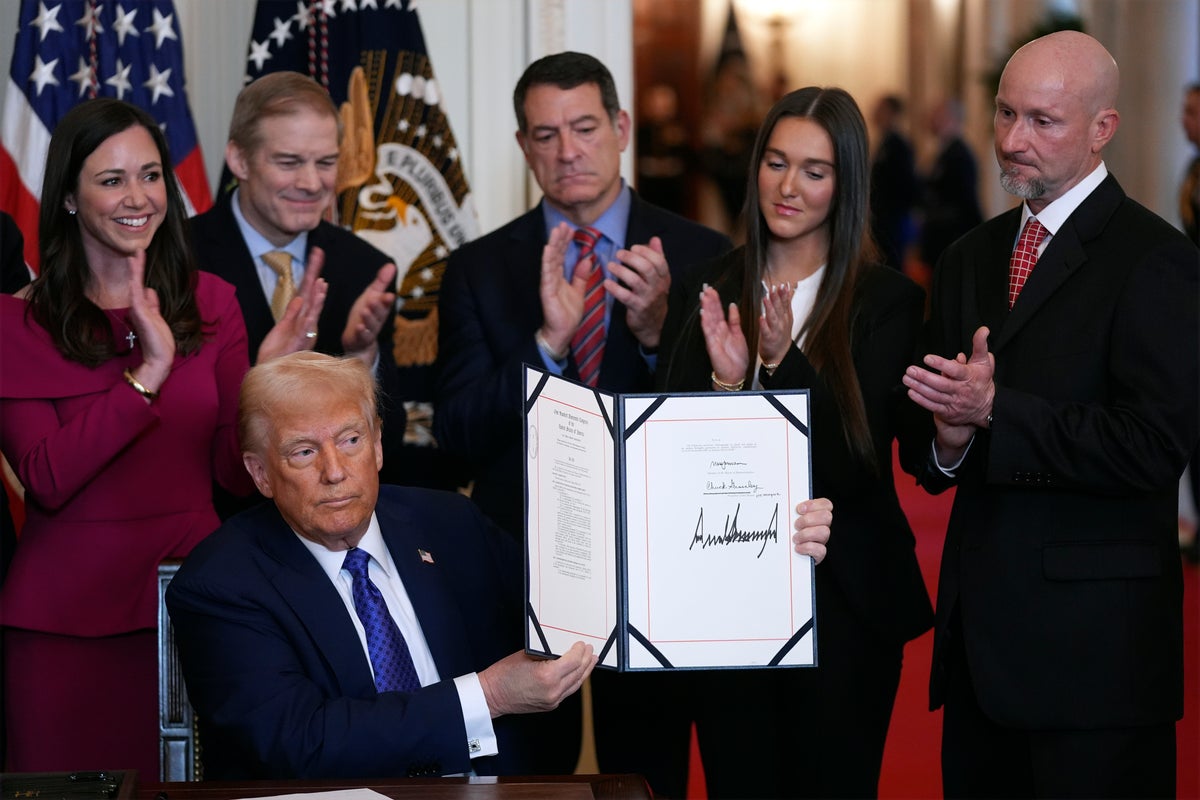
Former President Donald Trump has consistently positioned himself as a champion for Angel Families, recognizing their plight and integrating their stories into his broader call for stronger border security. His declaration of "National Angel Family Day" is a testament to his commitment to honoring these victims and giving their families a platform. On occasions honoring these families, Trump has not minced words, directly attributing their losses to what he describes as "politicians who put the comfort of foreign criminals before the safety of American citizens and American patriots."
This unwavering support from Donald Trump has provided Angel Families with a significant political voice, amplifying their message to a national audience. He has repeatedly asserted that these tragedies would not have occurred under more stringent immigration enforcement. This perspective forms a cornerstone of his political platform, especially concerning immigration. For more details on his consistent stance, you can read Trump Recognizes Angel Families, Links Deaths to Border Policy.
Beyond rhetoric, Trump has also moved to enact policy in response to these cases. The "Laken Riley Act," for instance, was the first law he committed to signing in a potential second term, specifically targeting migrants accused of crimes. This demonstrates a clear intent to translate the concerns of Angel Families into legislative action, further solidifying the connection between angel families and Trump's political agenda. For many Angel Families, Trump's advocacy represents not just empathy, but a promise of tangible change to prevent future tragedies.
The Laken Riley Tragedy: A Catalyst for Renewed Debate
The murder of Laken Riley in February 2024 sent shockwaves across the nation, becoming a tragic emblem for the Angel Family movement. Laken, a 22-year-old nursing student, was found dead after jogging on the University of Georgia campus. The subsequent arrest and conviction of Jose Antonio Ibarra, a Venezuelan man who had allegedly entered the U.S. illegally and was released to pursue his immigration case, ignited a fierce public debate on border policies and their consequences.
Laken's mother, Allyson Phillips, has expressed profound gratitude to Donald Trump for his consistent recognition of her daughter's story and for his unwavering commitment to addressing the issue of illegal immigration. "You have fought a fight that most people wouldn't want to have to fight," Phillips stated, highlighting the deeply personal nature of this advocacy for the grieving families. Her words underscore the emotional resonance of the issue, painting a picture of a compassionate leader who stands by those affected by these tragedies.
The Laken Riley case became an immediate flashpoint, galvanizing public opinion and intensifying calls for stricter immigration controls. It brought a human face to the statistics and policy discussions, illustrating in the starkest terms the potential dangers that proponents of stronger borders warn against. Her legacy has undeniably propelled the "Angel Family" movement into a more prominent national spotlight, solidifying its place in the political discourse. To understand more about the impact of her story, read Laken Riley's Legacy: The 'Angel Family' Movement and Trump.
Beyond the Headlines: Understanding the Broader Implications
The impassioned pleas of Angel Families and the political support they receive from figures like Donald Trump highlight a critical, often contentious, aspect of national policy: the intricate balance between humanitarian concerns, economic needs, and national security. The demand for stronger border security is not merely about preventing specific crimes, but about asserting national sovereignty, maintaining the rule of law, and ensuring the safety of citizens.
Practical Steps for Stronger Border Security:
- Increased Personnel and Resources: Deploying more Border Patrol agents, ICE officers, and support staff, equipped with advanced training and technology.
- Technological Enhancements: Utilizing drones, surveillance cameras, ground sensors, and advanced data analytics to monitor vast border areas more effectively.
- Physical Barriers: Constructing or reinforcing border walls and physical deterrents in strategic locations to funnel crossings to official points of entry.
- Expedited Deportation Processes: Reforming legal processes to swiftly identify, detain, and deport individuals who have entered illegally or committed crimes.
- Collaboration with International Partners: Working with neighboring countries to address root causes of migration and manage flows more effectively.
- Penalties for Sanctuary Cities: Implementing measures that discourage or penalize jurisdictions that limit cooperation with federal immigration authorities.
For Angel Families, these measures are not abstract policy points but essential safeguards that could have saved their loved ones. Their advocacy brings a crucial human element to the often-impersonal debate, forcing a re-evaluation of current immigration enforcement practices. While debates about the effectiveness and ethics of various border security measures continue, the voices of these victims serve as a powerful reminder of the profound stakes involved for those whose lives have been irrevocably altered by these tragedies.
The stories of Angel Families represent a profound call for accountability and change in America's immigration system. Their suffering, amplified by consistent recognition from figures like Donald Trump, underscores a deeply felt conviction that robust border security is not just a political preference, but a moral imperative. As the national conversation around immigration continues, their unwavering demands for justice and stronger enforcement will undoubtedly remain a powerful and emotional driving force.