Laken Riley's Legacy: The Catalyst for a Resurgent 'Angel Family' Movement
The tragic death of Laken Riley, a vibrant 22-year-old nursing student, sent shockwaves across the United States in early 2024. Found deceased after a morning jog on the University of Georgia campus, her murder swiftly became a national flashpoint, igniting fierce debate over immigration policy and border security. This heartbreaking event has not only left a void in the hearts of her loved ones but has also re-energized the "Angel Family" movement, a term championed by former President Donald Trump to describe families who have lost loved ones to crimes allegedly committed by individuals illegally present in the U.S. Laken Riley's story, inextricably linked with the broader discussion around immigration enforcement, has cemented her place as a powerful symbol in a deeply complex and emotional political landscape, significantly shaping the rhetoric surrounding Trump's renewed focus on angel families and border policy.
The Resurgence of the 'Angel Family' Movement and Laken Riley's Tragic Case
Laken Riley's life was tragically cut short on February 22, 2024. A promising student, her future was stolen by an act of violence that reverberated far beyond the confines of a college campus. The man ultimately convicted and sentenced to life in prison for her murder, Jose Antonio Ibarra, was identified as a Venezuelan national who had allegedly entered the U.S. illegally and was subsequently released to pursue his case in immigration court. This specific detail transformed a local tragedy into a national controversy, fueling arguments about the efficacy and consequences of current immigration policies.
In the wake of Laken's death, the concept of "Angel Families," first prominently used during Donald Trump's initial presidency, saw a powerful resurgence. This designation specifically refers to relatives of individuals killed by someone who was unlawfully present in the United States. For these families, their immeasurable personal loss is compounded by a profound sense that their loved ones' deaths were preventable, directly attributable to perceived failures in immigration enforcement. The emotional weight of their stories becomes a potent force in the ongoing political discourse, driving calls for stricter border controls and more rigorous vetting processes.
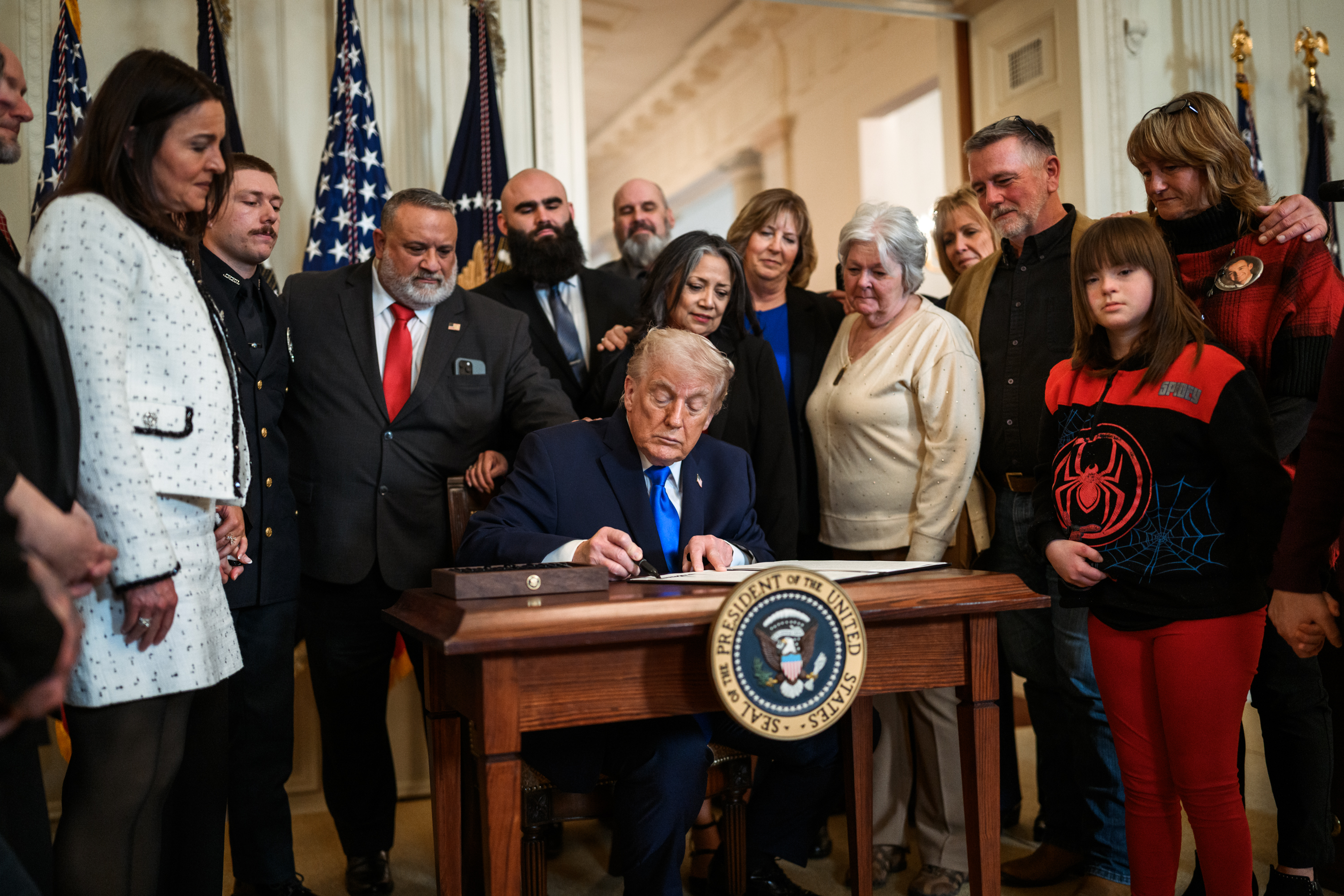
The timing was particularly significant when former President Trump signed a "National Angel Family Day" proclamation, coinciding directly with the national mourning and outrage surrounding Laken Riley's killing. This act of recognition underscored his commitment to amplifying the voices of these families and using their experiences to advocate for his immigration platform. The proclamation served not only as a tribute but also as a clear political statement, framing these individual tragedies within the broader context of national security and border policy.
Donald Trump's Role and the Call for Stronger Enforcement
Donald Trump has consistently positioned himself as a staunch advocate for "Angel Families," viewing their suffering as a direct consequence of what he describes as lax immigration policies. From the outset, even before her tragic passing, Trump vowed to never forget Laken Riley. His rhetoric is sharp and unambiguous, asserting that these families would still have their loved ones if immigration enforcement was stronger. He famously declared that these victims were "victims of politicians who put the comfort of foreign criminals before the safety of American citizens and American patriots." This powerful framing resonates deeply with a segment of the electorate concerned about border security and national sovereignty.
Trump's commitment extends beyond mere rhetoric. He has consistently used platforms, including White House events, to honor these families and reiterate his policy proposals. The proposed "Laken Riley Act," which targets migrants accused of crimes, is slated as the first law he would sign in a potential second term. This legislative initiative clearly demonstrates his intention to translate the emotional impact of cases like Laken's into concrete policy action, focusing on what he identifies as critical gaps in immigration law and enforcement.
Allyson Phillips, Laken Riley's mother, has publicly thanked Trump for his unwavering support. Her moving testimony, "You have fought a fight that most people would not want to have to fight," highlights the deep personal connection and gratitude many "Angel Families" feel towards Trump. Similarly, Steve Ronnebeck, father of Grant Ronnebeck who was killed by an individual unlawfully in the U.S., has labeled such deaths as "preventable," explicitly blaming the current administration's border policies. These powerful testimonials underscore the profound human impact of these tragedies and the urgent demands from victims for stronger border security, as further detailed in Angel Families Speak Out: Victims Demand Stronger Border Security.
Beyond the Headlines: Understanding the Policy Implications and Human Impact
While the personal stories of "Angel Families" are undeniably heartbreaking, their prominence in political discourse also brings forth complex policy implications. The strategic amplification of these individual tragedies serves to intensify the national debate on immigration, border security, and the intricacies of the asylum and vetting processes for migrants. It's crucial to acknowledge that, statistically, studies often indicate that immigrants, regardless of legal status, are not more prone to committing crimes than native-born citizens. However, high-profile cases like Laken Riley's undeniably hold immense emotional and political weight, shaping public perception and driving policy discussions.
The Emotional Core: Amplifying Voices of Loss
At the heart of the "Angel Family" movement lies the raw, profound grief of families coping with unimaginable loss. For many, their participation is not primarily political but a desperate plea for justice and a desire to prevent similar tragedies from befalling other families. The movement provides a powerful platform for voices that often feel marginalized or unheard within the broader, often academic, discussions of immigration policy. Laken's mother remembered her daughter as "the most responsible, hardworking, kind, selfless, beautiful Christian... She just wanted to go for a run that morning." Such personal tributes humanize the statistics and underscore the devastating ripple effect of violence.
Understanding these dynamics offers insights for policymakers and concerned citizens alike:
- Comprehensive Immigration Reform: The recurring tragedies highlighted by "Angel Families" underscore the urgent need for a truly comprehensive approach to immigration. This involves not only enhancing border security measures but also streamlining legal immigration pathways, addressing asylum backlogs, and ensuring robust internal enforcement mechanisms.
- Balancing Security and Humanity: A critical challenge lies in crafting policies that effectively ensure public safety without compromising humanitarian principles. This requires careful consideration of due process, the rights of asylum seekers, and the complexities of international law.
- Data-Driven vs. Anecdotal Narratives: While individual stories are powerful and emotionally resonant, policy decisions benefit from a foundation of comprehensive data and research. It's essential to understand both the systemic issues and the unique circumstances of each case to formulate effective solutions.
- Community Engagement and Support: Beyond legislative action, supporting organizations that advocate for victims of crime, irrespective of the perpetrator's background, and those working towards constructive, long-term solutions for immigration challenges is vital. This includes mental health support for affected families and educational initiatives to foster informed public discourse.
Conclusion
Laken Riley's legacy has transcended her personal tragedy, becoming a poignant symbol in the ongoing national conversation about immigration, border security, and public safety. Her name, alongside those of other victims remembered by the "Angel Family" movement, represents a profound human cost that has deeply resonated with many Americans. Donald Trump's consistent championship of "angel families trump" and his unwavering commitment to linking these tragedies to border policy failures have cemented this movement's place at the forefront of his political agenda. As the debate continues, Laken Riley's story and the collective voices of "Angel Families" will undoubtedly remain a powerful and emotional driving force, challenging the nation to confront the complexities of its immigration system and strive for solutions that honor both security and compassion.